
What is a Holter heart rhythm monitor?
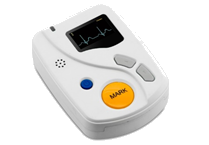
A Holter monitor is a small, portable device that monitors your heart rhythm for one to two days. During this time, the device records all of your heartbeats. This makes it possible to detect transient or occasional heart rhythm disturbances. These are abnormalities that may not be detected during a brief examination in the doctor’s office. Continuous monitoring plays a key role in diagnosing arrhythmias and in the overall assessment of heart function.
Origins and Historical Development of the Holter Monitor
The Holter device was developed at the Holter Research Laboratory in Helena, Montana, by experimental physicists Norman J. Holter and Bill Glasscock, who began working on radiotelemetry in 1949. Inspired by a suggestion from cardiologist Paul Dudley White in the early 1950s, they redirected their research toward the development of a portable heart monitoring device. The Holter device went into production in 1962.
When is a Holter monitor recommended?
A Holter monitor is usually indicated following a clinical cardiology examination and an electrocardiogram. It is particularly useful when the electrocardiogram does not provide your doctor with sufficient information about your heart rhythm.
The data recorded by the Holter monitor is retrieved using specialized software to determine whether there is a problem with the heart rhythm. If a standard Holter monitoring test does not record an irregular or abnormal heartbeat, even though there is strong clinical suspicion, a a portable arrhythmia detection device. This device operates on demand, meaning it activates the moment you feel the symptom that prompted you to see a cardiologist. Some personal devices, such as smartwatches, often offer heart rate monitoring and, rarely, an electrocardiogram.
Why and when is this procedure recommended?
If there are signs or symptoms of a heart problem, such as an irregular heartbeat (arrhythmia) or unexplained and sudden loss of consciousness (syncope), an electrocardiogram (ECG) is performed first.
However, an electrocardiogram often fails to detect all abnormalities in your heart rhythm, since it is performed over only a very short period of time. If your symptoms and signs suggest an occasional irregular heart rhythm, your doctor may recommend a Holter monitor. This test is more likely to detect heart rhythm abnormalities or arrhythmias than an electrocardiogram.
Your doctor may also recommend a Holter monitor if you have a heart condition that increases your risk of developing an abnormal heart rhythm. This may be necessary for one or two days, even if you haven’t experienced any symptoms of an abnormal heartbeat.
Preparation Before Holter Monitoring
The chest area must be clean and relatively smooth before the Holter monitor is applied. This is necessary because electrodes and adhesive patches will be attached to the chest for 24 or 48 hours. Most devices cannot be removed and must be kept dry during the monitoring period.
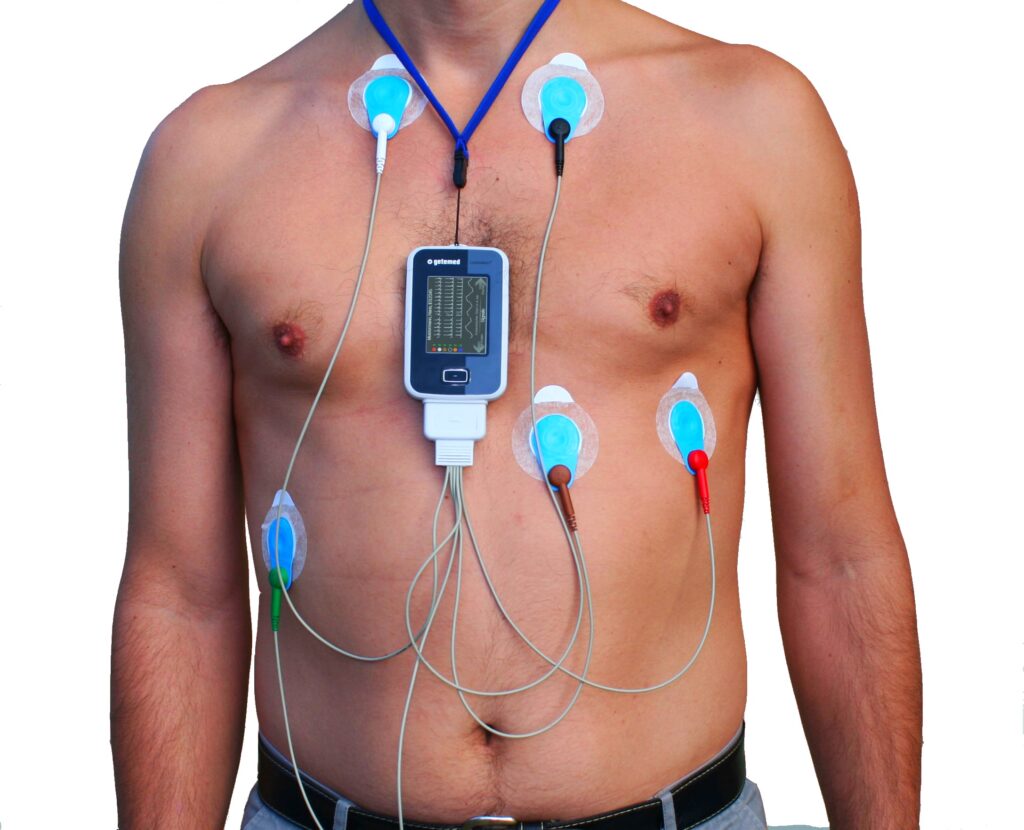
The doctor or assistant will place the electrodes on your chest. For men, shaving may be necessary. The electrodes will then be connected to the recording device, and the device will be positioned correctly so that it can record the data transmitted by the electrodes. The recording device is about the size of a small cell phone.
Once it has been applied and you have received instructions on how to keep it on, you may resume your normal activities.
What should you keep in mind while recording?
There are no significant risks associated with using a Holter monitor other than possible skin irritation at the sites where the electrodes were placed. However, the Holter monitor must not get wet. The recording is not usually affected by other electrical devices. Nevertheless, you should avoid metal detectors, magnets, microwave ovens, electric blankets, electric razors, and electric toothbrushes. These devices can interrupt the signal from the electrodes to the monitor. Also, as a precaution, keep cell phones at least 6 inches away from the screen for the same reason.
Is a Holter test safe?
Holter monitoring is painless and noninvasive. You can hide the electrodes and wires under your clothes. You can also wear the recording device on your belt or attach a strap. Once recording begins, do not remove the Holter device under any circumstances unless absolutely necessary, and it must remain attached even while you sleep.
Daily Activities During Use
You can go about your daily routines and activities as usual. Your doctor will tell you how long you’ll need to wear it. It may be anywhere from 24 to 48 hours, depending on your underlying condition or how often you experience symptoms. If you wish, you can keep a diary of all your daily activities while wearing the Holter monitor. Write down what activities you do and exactly when you do them. Also note any symptoms you experience while wearing the device, such as chest pain, shortness of breath, or palpitations. Your doctor can compare the data from the Holter monitor with your diary, which provides additional information and may aid in the diagnosis.
Results Evaluation and Interpretation Your doctor will evaluate the results of your Holter monitoring. The information from the Holter monitor may reveal that you have a heart condition (usually an arrhythmia), or further tests may be needed to determine the cause of your symptoms.
In some cases, your doctor may not be able to diagnose your condition based on the Holter results, especially if you did not have irregular heart rhythms during the recording.
If you experience symptoms such as palpitations, arrhythmia, fainting spells, or if further evaluation of your heart rhythm is needed, a Holter monitor can provide valuable information.
At the clinics CarE MediC , we offer 24- and 48-hour Holter monitoring using a 12-lead device, allowing for a detailed and reliable assessment of your heart rhythm during your daily activities. Furthermore, thanks to the 12 leads, it is possible to investigate and locate the pathological focus causing a potential arrhythmia.
For more information or to schedule your exam, you can contact our clinics.