
WHAT IS IT?
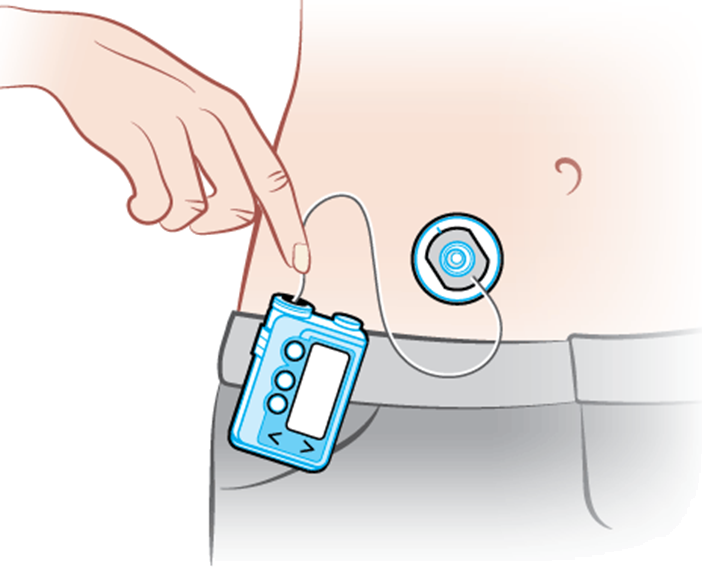
An insulin pump is an electronic device that delivers insulin continuously. It is smaller than a cell phone. It is placed on the outside of the body (usually on the abdomen) and, through a catheter connected to a thin tube, enters the subcutaneous tissue (the layer of fat beneath the skin) to deliver the programmed amount of insulin. The pump can be worn in a holster around the waist or attached to a belt, in a pocket, or on an armband.
HOW TO USE IT
To use an insulin pump, you will need hands-on training from a diabetes care team. At the clinics CarE MediC , we perform the fitting and demonstrate the operation of pumps from all manufacturers. Specifically, we provide personalized training on how to fill a pump, select an infusion site, how to change an infusion set, disconnect the device, calculate, configure, and program basal and bolus doses, as well as how to troubleshoot potential problems.
HOW IT WORKS
Insulin pumps are devices that mimic the way the pancreas works by continuously delivering small doses of short-acting insulin (basal rate). The device is also used to deliver variable amounts of insulin when we eat (bolus). Basal insulin rates are usually set on the pump by your doctor, and you can have one or more, depending on your needs. You program the bolus insulin dose for meals directly into the pump. The pump calculates the amount of insulin you need for each meal based on your glucose levels and the amount of carbohydrates you eat.