
WHAT IS IT?
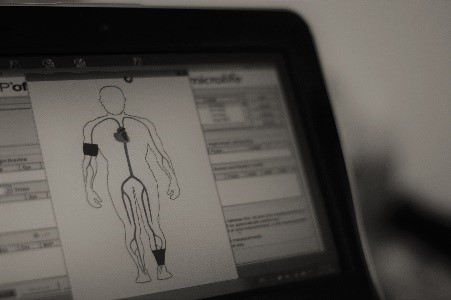
Comparing blood pressure in the upper and lower extremities (in the arm and at the ankles) can reveal peripheral arterial disease (PAD). A basic noninvasive test for detecting problems in the peripheral arteries is the simultaneous measurement and comparison of blood pressure, known as the ankle-brachial index (ABI).
At the clinics CarE MediC performs peripheral artery disease screening using specialized digital equipment and all relevant parameters to provide immediate and reliable results. At the end of the test, a detailed report is provided with the test results and further recommendations, if deemed necessary.
PERIPHERAL ARTERIAL DISEASE
The arteries that supply blood to various parts of the body are often not examined as closely as the coronary arteries that supply the heart or the carotid arteries that supply the brain. These so-called peripheral arteries are nothing more than the continuation of the arterial network from the aorta to the viscera and the lower extremities. They play a central role in the good health of the kidneys, internal organs, and lower extremities. They are also equally susceptible to the mechanisms that cause the coronary arteries to harden, narrow, or become blocked, and to similar risk factors. Peripheral artery disease causes discomfort, disability, and sometimes death.
WHY IS IT BEING DONE?
In a perfectly healthy circulatory system, the blood pressure measured in the brachial artery is a good indicator of blood pressure throughout the rest of the body. However, when blood flows through stiff, narrowed, or blocked arteries, the pressure at points far from the heart may differ from that in the arm. The ankle-brachial index compares blood pressure at two locations. A large difference between the two may indicate the presence of peripheral arterial disease. The ABI method can also be used to monitor the progression of the disease and/or the effect of treatment.
According to the latest ESC/ESVS guidelines:
The individuals who should undergo a noninvasive test to screen for peripheral artery disease using the ABI are:
Patients with clinically suspected severe peripheral arterial disease
– Non-palpable peripheral claudication of the lower extremities
– Typical intermittent claudication (pain during exercise or walking localized in the calf) or symptoms suggestive of severe peripheral arterial disease
– Non-healing lower extremity ulcer
Patients at risk due to the following clinical conditions:
– Atherosclerotic diseases: Coronary artery disease (CAD), carotid artery disease
– Other conditions: aneurysms, chronic kidney disease, heart failure
Asymptomatic individuals with no clinical symptoms but who are at increased risk:
– Men and women aged> 65
– Men and women aged <65 who are classified as being at high risk for cardiovascular disease according to the ESC guidelines, i.e., patients with type 2 diabetes (T2D), smokers, or those with a very high SCORE or ASCVD score
– Men and women aged> 50 years with a family history of peripheral artery disease
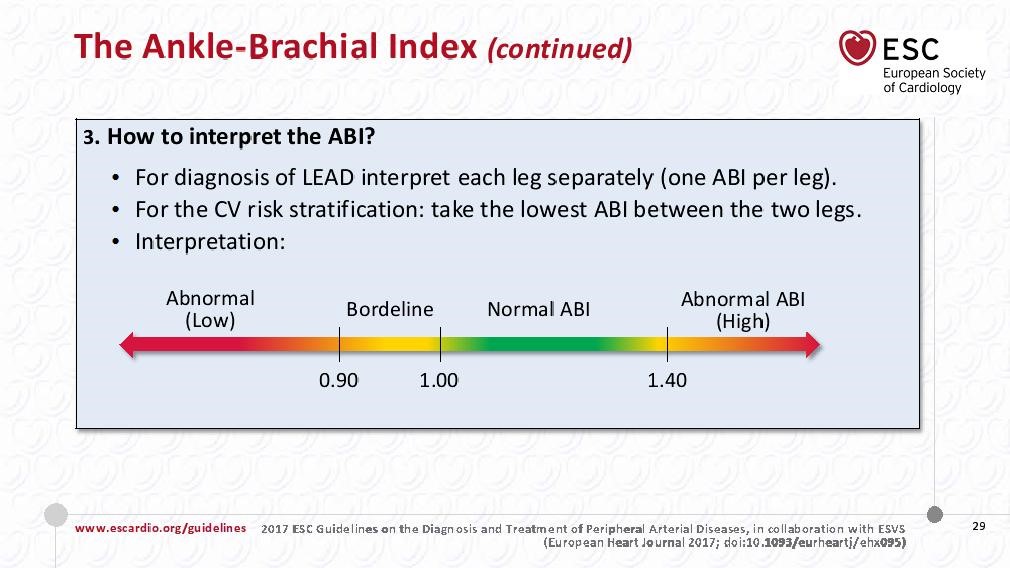
Normal and Abnormal ABI Values. From the official ESC/ESVS guidelines for the evaluation of peripheral artery disease.